Showing posts sorted by date for query henry. Sort by relevance Show all posts

Sunday, August 7, 2016

A remarkable article in today's NYT Magazine describes what appears to be evidence of scientific malfeasance in the treatment of data from one of the most influential studies in neuroscience history. The article, by Luke Dittrich, suggests that MIT neuroscientist Suzanne Corkin either ignored or actively suppressed evidence that the brain of Henry Molaison  had damage to its left frontal lobe. 

Decades of research presumed that Molaison's only brain damage was the product of a temporal lobectomy in which his hippocampus, amygdala, and entorhinal cortex were removed in a desperate effort to quell his epileptic seizures. 

Studies of Molaison serve as the foundation for a huge body of memory research spanning decades. It stands to reason that this new evidence could throw into question at least some of that fundamental work.


Dittrich's grandfather was the surgeon who removed Molaison's hippocampus in 1953. The writer's 2010 Esquire piece about HM is also excellent and his book on the subject, 
Patient H.M.: A Story of Memory, Madness, and Family Secrets, to be released August 9, will surely shed more light on what appears to be a troubling history, some of it, I expect, implicating his own grandfather, neurosurgeon William Beecher Scoville. 


Thursday, October 24, 2013

Epilepsy a Window Onto Brain Function

John Blanchard/ The Chron

A good piece in yesterday's San Francisco Chronicle reviews the key role epilepsy patients and their doctors have played in the history of neuroscience. The article, Epilepsy Opens a New Window Onto Brain Function, by Kristen Brown, focuses on the emerging importance of intracranial studies of epilepsy patients whose brains have been wired with electrodes to help locate the foci of their seizures. While these patients are being observed, they often donate their wired-brain-time to science, granting by far the best available extended access to the inside of a conscious human brain. But Brown's piece also looks at key contributions of Henry Molaison, who taught us much of what we know about human memory when his hippocampus was removed to quell his seizures, and Wilder Penfield, who first described the functional geography of the motor and sensory cortices by systematically stimulating and observing the effects in his patients.

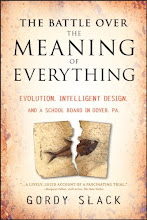
This is fascinating stuff! Someone should write a book on the subject!

Tuesday, October 26, 2010

More of HM

Henry Molaison's digitized brain.
Here is another story about HM, this one, in the November Esquire, even longer and more thorough than the one I pointed to in my last post. It is by Luke Dittrich, who happens also to be the grandson of William Beecher Scoville, the surgeon who removed Molaison's hippocampus. This piece sheds some interesting light on Scoville and on the fascinating work of UC San Diego neuroanatomist Jacopo Annese, director of the Brain Observatory. Anesse was in charge of freezing HM's brain just after the experimental subject died two years ago. Then he thinly sliced it and took high-resolution images of each section to record it at a single-neuron level. The images will be digitized and reconstructed to make a publicly-available, explorable, 3-D rendition of what is already the most studied brain in history.

One thing has been bugging me a little, though. Why did the ambitious Scotville decide to remove both lobes of HM's hippocampus in the first place? Wouldn't it have been prudent to first remove one side and see if the seizures stopped? Was Scotville really just trying to quell HM's seizures, or was he also putting himself on the neuroscience map by revealing the function of those then-still-mysterious parts of the limbic system? If the latter, it deepens HM's already unfathomable martyrdom.

Wednesday, October 20, 2010

WE Remember, Because HM Forgot

Henry Gustav Molaison

So many big moments in the history of neuroscience are the products of efforts to understand or treat epilepsy. Look for instance at this fine recent story by Mo Costandi in the Guardian memorializing one of the most important figures in the field, a man who for decades was known simply as HM. Henry Molaison (whose full name was only released upon his death two years ago) had been dogged by seizures since childhood and was so desperate to shake them that, in 1953, he agreed to have his hippocampus removed. His surgeon knew HM's seizures were originating there, but no one knew what the side effects would be. The surgery had its intended effect; his seizures were reduced from dozens a year to about two. But in exchange for that gain, he lost the ability to make new memories, a condition known as severe anterograde amnesia.

The main character in Memento, the excellent movie about an amnesiac driven to keep progressing into the future by preserving his past with Post-Its, annotated Polaroids, and tattoos, was purportedly modeled after Molaison.

Before Molaison, most neuroscientists believed memory to be distributed all through the brain.  The first paper about the case, published by Molaison's  surgeon, William Beecher Scoville, and neuroscientist Brenda Milner (both at the Montreal Neurological Institute) showed that though even without his hippocampus Molaison could still retain small amounts of information for short periods of time, he couldn't store them anywhere before they were supplanted by new ones. This suggested, for the first time, that memory has distinct long- and short-term components. Memory research has never been the same, and today no one doubts the central role of that weird little seahorse-shaped part of the limbic system known as the hippocampus in creating and quickening new memories; it is now arguably the most intensively studied part of the brain.

Molaison died two years ago, at 82, but his brain (still being studied at the Brain Observatory UC San Diego) is still revealing secrets about the nature of memory and what makes it work--and cease working.

It's hard to say where memory research would be today if it weren't for Molaison and his epilepsy; possibly decades behind where it is now.  Let's not forget him...or the many other courageous and generous patients with epilepsy who shed so much light on this field.